Your customer has a vision. They want an aggressive stance for their truck or a sleek, tucked-in look for their performance car. Your job is to turn that vision into a reality, safely and effectively. This is where the art and science of wheel fitment come into play. It’s the technical process that delivers the aesthetic result. By mastering concepts like offset and backspacing, you can precisely control how a wheel sits in the fender, achieving the exact look your customer desires without compromising handling, safety, or tire longevity. This guide will equip you with the knowledge to confidently translate any customer’s request into a perfectly executed, head-turning setup.
Key Takeaways
- Prioritize Fitment for Safety and Profit: Correct wheel fitment is about more than just looks; it’s a core part of vehicle safety and performance. Getting it right prevents costly returns, protects your shop’s reputation, and builds customer trust.
- Speak the Language of Fitment: Mastering the key specs (bolt pattern, diameter, width, offset, and center bore) is essential. This knowledge empowers you to guide customers confidently, prevent installation errors, and deliver a perfect result every time.
- Combine Tools with Expert Advice: Use online fitment calculators as a starting point to visualize changes in stance and clearance. For complex jobs or final confirmation, lean on your distributor’s expertise to eliminate guesswork and guarantee a successful installation.
What Is Wheel Fitment?
As a wheel dealer, you know that getting the right look is important to your customers. But getting the right fit is critical for your business. Wheel fitment is the science of matching a wheel and tire combination to a specific vehicle. It’s a puzzle where every piece, from the wheel’s diameter and width to its offset and bolt pattern, must fit perfectly. When all these measurements align, the wheel functions safely and correctly, without interfering with the vehicle’s suspension, brakes, or bodywork.
Think of it as the difference between a tailored suit and one that’s off the rack. While the off-the-rack option might look okay, the tailored one fits perfectly, moves with the body, and performs without restriction. Proper wheel fitment provides that same level of precision for a vehicle. It ensures the wheel is not just an aesthetic upgrade but a functional one that preserves, and can even enhance, the vehicle’s performance and safety. Getting it right means happy customers, fewer returns, and a reputation for expert service.
Why Fitment Matters: Safety and Performance
Getting wheel fitment right goes far beyond looks; it’s a fundamental aspect of vehicle safety. A wheel that fits correctly is securely mounted to the hub, which prevents dangerous vibrations at speed and ensures the load is distributed as the vehicle manufacturer intended. Incorrect fitment can lead to rubbing against brake components or suspension parts, causing damage and creating a serious safety hazard.
Proper fitment is also key to maintaining the vehicle’s performance characteristics. The right wheel and tire combination helps preserve the original suspension geometry, which is crucial for predictable handling, stable cornering, and effective braking. When customers ask for a new set of wheels, they’re trusting you to guide them to a choice that is both stylish and safe. Using a fitment calculator can help you confirm these critical measurements before finalizing an order.
The Effect on Tire Wear and Handling
Improper wheel fitment has a direct and costly impact on tire longevity. When a wheel’s offset or width is wrong for the vehicle, it can alter the suspension geometry, changing the camber and toe angles. This forces the tire to make uneven contact with the road, leading to accelerated wear on the inner or outer edges. For your customers, this means replacing expensive tires far sooner than expected.
Beyond tire wear, poor fitment compromises the vehicle’s handling. A common issue is tire rub, where the tire makes contact with the fender liner or suspension components during turns or when going over bumps. This not only creates an annoying noise but can also damage the tire and limit the vehicle’s maneuverability. Furthermore, changing the overall diameter of the wheel and tire can introduce speedometer error, giving the driver an inaccurate speed reading.
The Language of Wheel Fitment: Key Terms Explained
Getting wheel fitment right starts with speaking the language. These five terms are the foundation of every fitment conversation, and mastering them is essential for any shop. Knowing them inside and out will help you guide your customers to the perfect set of wheels, ensuring a safe, high-performance result that prevents costly returns and builds trust in your expertise. When you can explain these concepts clearly, you position your shop not just as a place to buy parts, but as a source of reliable advice. This knowledge is your key to matching the right wheel to the right vehicle every single time, which is the cornerstone of a successful wheel and tire business. It reduces errors, improves customer satisfaction, and ultimately protects your bottom line. Think of it as the difference between simply selling a product and providing a complete solution. Before we get into the details, remember that each of these specs works together. A change in one can affect the others, so a holistic understanding is crucial for getting the fitment perfect on the first try.
Bolt Pattern
The bolt pattern, or lug pattern, tells you how the wheel attaches to the vehicle’s hub. It’s shown as two numbers, like 5×114.3. The first number is the count of lug holes on the wheel, and the second is the diameter of the circle those holes create, measured in millimeters. This is one of the first specs you should check, as it’s non-negotiable. An incorrect bolt pattern means the wheel simply won’t mount to the vehicle. For a deeper dive into specific patterns, you can find resources for understanding wheel bolt patterns to help you and your team become even more proficient. Getting this right from the start saves time and prevents any chance of an unsafe installation.
Wheel Diameter and Width
Wheel diameter and width are the two main measurements that define a wheel’s size. Diameter is the distance across the face of the wheel, measured in inches, and determines the overall look and the tire sidewall height. Width is the measurement between the inside edges of the wheel’s flanges, also in inches. This spec dictates what tire widths can be safely mounted. A wider wheel can accommodate a wider tire for better grip and a more aggressive stance, but it’s crucial to ensure the complete package fits without rubbing. Both wheel size and fitment directly influence the vehicle’s handling, so matching them to the car and the driver’s goals is essential for performance and safety.
Offset and Backspacing
Offset and backspacing determine the wheel’s position within the wheel well. Offset is the distance in millimeters from the wheel’s centerline to its mounting surface. A positive offset pulls the wheel inward, while a negative offset pushes it outward. Backspacing is the distance from the mounting surface to the wheel’s back edge. These measurements are critical for clearing brake calipers, suspension parts, and fenders, especially on modified vehicles. Nailing the offset is how you achieve the perfect “stance,” whether your customer wants a tucked-in look or an aggressive, wide posture. Properly understanding wheel offset is key to avoiding interference issues that can damage the wheel, tire, or vehicle.
Center Bore
The center bore is the large hole in the middle of the wheel that fits over the vehicle’s hub. This connection is what truly centers the wheel, ensuring a smooth, vibration-free ride. If the wheel’s center bore is smaller than the hub, it won’t fit. If it’s larger, the wheel won’t be properly centered by the hub, which can cause vibrations even if the lug nuts are tight. In these cases, you can use hub-centric rings to fill the gap and create a snug, secure fit. Explaining to a customer what a center bore is and why it matters shows your attention to detail and commitment to a quality installation.
Load Rating
A wheel’s load rating is the maximum weight it is certified to carry. This is a critical safety specification that should never be overlooked. The load rating for each wheel must be high enough to support its share of the vehicle’s gross vehicle weight rating (GVWR), which includes the vehicle itself plus its maximum capacity for passengers and cargo. Installing wheels with an inadequate load rating can lead to catastrophic failure, especially on trucks and SUVs that carry heavy loads or tow trailers. Always verify the vehicle’s requirements and confirm the wheels you’re selling meet or exceed them. You can learn more about understanding wheel load ratings to ensure every sale is a safe one.
The Risks of Getting Fitment Wrong
Getting wheel fitment right is about more than just aesthetics; it’s a critical factor for vehicle safety, performance, and longevity. When a wheel doesn’t fit correctly, it can set off a chain reaction of problems that lead to unhappy customers, costly repairs, and avoidable returns. For your shop, understanding these risks is key to providing expert service and building trust. An incorrect fitment can compromise everything from handling and braking to the lifespan of tires and suspension components, turning a simple upgrade into a significant liability.
Poor Handling and Braking
A vehicle’s handling and braking systems are engineered to work with specific wheel and tire dimensions. When an improper fitment alters the vehicle’s track width or center of gravity, it can seriously compromise stability. Wheels that are too wide or narrow for the tire can distort the tire’s contact patch with the road, leading to decreased traction and longer stopping distances. This is especially dangerous during sharp turns or emergency braking maneuvers, where predictable handling is essential for driver safety. Ensuring the fitment is correct preserves the vehicle’s intended performance characteristics.
Suspension Rub and Clearance Issues
One of the most common and damaging results of poor fitment is physical interference between the wheel or tire and the vehicle itself. If a wheel has the wrong offset or is simply too large, it can easily rub against the fenders, suspension components, or brake calipers. This rubbing might only happen during turns or when the suspension compresses over bumps, but the damage adds up over time. It can wear through fender liners, damage suspension parts, and even slice into the tire itself, creating a serious safety hazard for your customer.
Premature Tire and Suspension Wear
Incorrect wheel fitment places unintended stress on tires and suspension components, leading to accelerated wear and tear. A wheel that isn’t properly aligned with the hub can cause misalignment issues that result in uneven and premature tire wear. This not only costs your customer money in frequent tire replacements but also affects the vehicle’s handling. Furthermore, the added leverage from an improper offset can strain wheel bearings, ball joints, and other suspension parts, leading to early failure of components that were designed to last for tens of thousands of miles.
Inaccurate Speedometer Readings
A vehicle’s speedometer is calibrated based on the original equipment (OE) wheel and tire combination’s overall diameter. When you install wheels and tires with a different diameter, the speedometer’s reading can become inaccurate. A larger diameter will cause the speedometer to read slower than the actual speed, while a smaller diameter will make it read faster. This discrepancy can lead to unintentional speeding tickets or cause confusion about the vehicle’s true mileage. In many cases, you may need to recalibrate your speedometer to ensure it accurately reflects the vehicle’s speed.
How to Read Wheel and Tire Sizes
Helping your customers find the right wheels and tires starts with speaking the language. The string of numbers and letters on a wheel or tire sidewall isn’t just jargon; it’s a precise code that tells you everything about its size and specifications. Getting this right prevents fitment issues, ensures vehicle safety, and keeps your customers happy. Let’s break down how to read these numbers so you can confidently guide every sale.
Decoding Wheel Size Numbers
When you look at a wheel’s specs, you’ll typically see a format like “18×8”. This is the wheel’s size, expressed as “Diameter x Width” in inches. The first number, 18, is the wheel’s diameter, which is the distance across its face. The second number, 8, is the wheel’s width, measured between the inner edges where the tire bead sits. The diameter is non-negotiable, as it must perfectly match the tire’s inner diameter for a safe fit. As experts explain, understanding wheel sizes is the first step to ensuring proper fitment and avoiding costly mistakes or unsafe installations for your customers.
Decoding Tire Size Numbers
Tire sizes look a bit more complex, but they’re just as straightforward once you know the code. Take a common size like “P225/60R17”. The “P” means it’s a passenger car tire. The “225” is the tire’s width in millimeters from sidewall to sidewall. The “60” is the aspect ratio, meaning the sidewall height is 60% of the tire’s width. The “R” indicates it has radial construction, the standard for modern tires. Finally, the “17” is the wheel diameter in inches that the tire is designed to fit. A solid grasp of tire size basics is essential for any shop aiming to provide accurate and safe service for every vehicle.
Understanding Tire Dimensions: Width, Aspect Ratio, and Sidewall
Let’s look closer at width and aspect ratio, as they heavily influence a vehicle’s performance and ride feel. A wider tire generally provides more grip, while a narrower one can offer better fuel economy. The aspect ratio is key to the tire’s profile. A lower aspect ratio means a shorter sidewall, which creates a sportier look and sharper handling. However, as a tire buying guide might note, this often comes with a stiffer ride. To find the sidewall height, you just multiply the width by the aspect ratio. For a 225/60R17 tire, the sidewall is about 135 mm tall (225 mm x 0.60). Balancing these dimensions is key to matching a tire to your customer’s driving style.
Offset and Backspacing: Why These Specs Make or Break Fitment
Beyond diameter and bolt pattern, offset and backspacing are the two measurements that truly determine how a wheel sits on a vehicle. Getting them right is the difference between a perfect, head-turning stance and a costly, damaging mistake. For your shop, understanding these specs is essential for guiding customers to the right choice, preventing returns, and ensuring every vehicle leaves with a safe and functional setup. These numbers dictate everything from fender clearance to the final aesthetic, making them a non-negotiable part of any fitment conversation.
Positive, Negative, and Zero Offset
Offset is the distance, measured in millimeters, between the wheel’s mounting surface (where it bolts to the car) and the centerline of the wheel. Think of it as the primary factor that determines how far in or out a wheel will sit in the fender well.
- Positive Offset (+): The mounting surface is toward the front or “face” of the wheel. This pulls the entire wheel inward, closer to the vehicle’s suspension. Most modern front-wheel-drive and all-wheel-drive cars use positive offset wheels.
- Negative Offset (-): The mounting surface is toward the back or “brake side” of the wheel, creating a deep-dish look. This pushes the wheel outward, away from the vehicle, for a wider, more aggressive stance.
- Zero Offset (0): The mounting surface is perfectly aligned with the wheel’s centerline.
How Offset Defines Stance and Clearance
Offset directly controls both the vehicle’s stance and its clearance from critical components. A lower or more negative offset pushes the wheels outward, creating a wider, more aggressive posture that is popular for trucks and custom builds. A higher positive offset tucks the wheels inward for a more conservative, factory-like appearance.
However, this choice isn’t just about looks. The wrong offset can cause serious problems. Pushing a wheel too far out with a negative offset can lead to the tire rubbing against the fender lip during turns or suspension travel. Conversely, pulling it too far in with a high positive offset can cause the inner edge of the wheel or tire to interfere with suspension parts, brake calipers, or the inner fender lining. A global wheel fitment database can help you find the stock offset to use as a baseline.
A Quick Guide to Poke, Inset, and Fender Clearance
When discussing stance, you’ll often hear the terms “poke” and “inset.” These simply describe how the wheel sits in relation to the fender. “Poke” refers to how much the wheel and tire combination sticks out past the fender, a look often desired in the truck and stance communities. “Inset” describes how far the wheel is tucked inside the fender well.
Both are a direct result of the wheel’s width and offset. Your job is to balance the customer’s desired look with practical reality. While a little poke can look great, too much can cause tire-to-fender contact and may even be illegal in some areas. Ensuring proper fender clearance is crucial for a safe, drivable vehicle that won’t come back to your shop with rubbing issues. An alloy wheel fitment calculator is a great tool for visualizing these changes before ordering.
How to Calculate Backspacing from Offset
Backspacing is another critical measurement that works hand-in-hand with offset. It is the distance from the wheel’s rearmost edge to the mounting pad. While offset is measured from the centerline, backspacing is measured from the back edge, giving you a clear idea of how much space the wheel will take up inside the wheel well. This is especially important for checking clearance with large brake kits and suspension components.
You can easily calculate backspacing if you know the wheel’s width and offset. First, convert the wheel width to millimeters (multiply by 25.4), then use this formula:
Backspacing (mm) = (Wheel Width / 2) + Offset
Knowing both offset and backspacing gives you a complete picture of how the wheel will fit, helping you avoid clearance issues on both the inside and outside of the wheel assembly.
Debunking Common Fitment Myths
When it comes to wheel fitment, misinformation can spread quickly. Customers often come into the shop with ideas they’ve picked up online that sound right but can lead to major issues down the road. As a trusted expert, your job is to guide them toward a safe and successful setup. Let’s clear up a few of the most common fitment myths you’re likely to encounter.
Myth: Bigger Wheels Equal Better Performance
It’s a classic request: “I want the biggest wheels that will fit.” Many customers believe larger wheels automatically mean better performance. While big wheels can definitely create a striking look and a lower-profile tire can stiffen the sidewall for sharper cornering, it’s not a simple upgrade. Larger wheels add unsprung weight, which can make the ride feel harsher and negatively affect acceleration and braking. The key is to find a balance between aesthetics and the vehicle’s intended use, not just to maximize diameter. You can use a wheel size comparison tool to see how different dimensions impact the overall setup.
Myth: All Wheels of the Same Size Fit Alike
This is a huge one. A customer might see a set of 18-inch wheels online and assume they’ll fit their car because it also has 18-inch wheels. But as you know, diameter is just one piece of the puzzle. Fitment is a combination of several critical specs, including the bolt pattern, offset, center bore, and wheel width. A wheel with the wrong bolt pattern won’t even mount to the hub, while incorrect offset can cause rubbing against the suspension or fenders. Always confirm every single measurement before assuring a customer that a wheel will fit their specific vehicle.
Myth: Any Tire Fits Any Wheel
This myth is not just wrong, it’s dangerous. You can’t just stretch any tire onto any wheel, even if the diameter matches. Every tire is manufactured with an approved rim width range. Mounting a tire on a wheel that is too wide or too narrow compromises the tire’s structure and integrity. This can lead to an improper contact patch, poor handling, uneven wear, and an increased risk of the tire debeading from the wheel, which could cause a catastrophic failure. Always check the tire manufacturer’s specifications to ensure it’s a match for the wheel’s width.
Myth: Wheel Size Changes Don’t Affect the Speedometer
Many drivers don’t realize that changing their wheel and tire size can throw off their speedometer. Your vehicle’s speedometer is calibrated based on the original overall diameter of the factory tire. When you install a larger or smaller tire, you change the circumference, which alters how many times the wheel rotates per mile. A larger tire will cause the speedometer to read slower than your actual speed, while a smaller one will make it read faster. You can calculate the difference to inform your customer, as a significant change might even require speedometer recalibration for accuracy and safety.
How to Find the Perfect Fitment
Finding the perfect wheel fitment isn’t about guesswork; it’s a methodical process that ensures safety, performance, and the exact stance your customer wants. Getting it right means happier customers, fewer returns, and a stronger reputation for your shop. The key is to follow a consistent set of steps for every vehicle, whether it’s a stock daily driver or a heavily modified truck. By starting with the vehicle’s original specifications and carefully calculating the impact of any changes, you can confidently select a wheel and tire package that fits flawlessly.
This process involves four key stages. First, you establish a baseline by looking up the OEM specifications. Next, you determine the acceptable ranges for the new setup, understanding the tolerances for width, offset, and diameter. Then, you must verify that the new wheels will clear all brake and suspension components, a step that can prevent major headaches. Finally, you’ll need to account for any vehicle modifications, like lift or lowering kits, which completely change the fitment equation. Walking through these steps will help you nail the fitment every time.
Start with OEM Specifications
Before you can explore custom options, you need a solid baseline. The vehicle’s Original Equipment Manufacturer (OEM) specifications are your starting point. These factory specs for wheel diameter, width, offset, and bolt pattern are the foundation upon which all modifications are built. Knowing the original setup helps you understand how a new wheel will alter the vehicle’s stance and handling. A great way to find this information is to use a comprehensive database. For instance, Wheel-Size.com is a fantastic free resource that details original factory sizes and even suggests plus-sizing options for a huge range of vehicles, giving you a reliable reference point for any project.
Know Your Fitment Ranges and Tolerances
Once you have the OEM specs, you can determine how much you can safely deviate from them. This is where you calculate the impact of wider wheels, different offsets, or larger tires. Online fitment calculators are your best friend here. A good alloy wheel and tyre fitment calculator can show you the exact differences in diameter, poke, and inset between the old and new setup. It even estimates the potential speedometer error, which is a crucial detail to share with your customers. This step transforms fitment from a guessing game into a precise science, allowing you to see how the new wheels will sit before you ever mount a tire.
Check for Brake and Suspension Clearance
A wheel might have the correct bolt pattern and offset on paper but still not fit the car. The most common culprits are large brake calipers (especially on performance models) and unique suspension components that interfere with the wheel barrel or spokes. While nothing beats a physical test fit, some advanced tools can help you get very close. For example, some calculators include a real-time clearance visualizer that simulates how the new wheel will sit in relation to the car’s components. This is especially helpful for confirming fitment on vehicles with large factory brakes or complex aftermarket suspension systems, saving you time and preventing costly mistakes.
Fitment for Lifted and Lowered Vehicles
For lifted trucks or lowered performance cars, OEM specs are often just a distant memory. Suspension modifications completely alter the available space in the wheel wells, changing the rules for what will fit. A lift kit creates more vertical clearance, allowing for much larger tires, while a lowering kit reduces that space and requires careful offset and width calculations to avoid rubbing. This is another area where a fitment calculator shines. By inputting the new tire dimensions, you can see exactly how the changes affect ride height and overall geometry, helping you select a wheel and tire package that complements the modification instead of conflicting with it.
How to Use a Wheel Fitment Calculator
Online wheel fitment calculators are fantastic tools for any shop. They help you and your customers visualize how a new set of wheels and tires will look and perform on a vehicle before you even place an order. Using one correctly can save you a ton of time, prevent costly ordering mistakes, and give your customers the confidence to go with a more aggressive or custom setup. Think of it as a digital test fit that helps you get the job done right the first time.
What to Know Before You Calculate
A calculator is only as good as the information you give it, so your first step is to gather some key specs from the vehicle’s current setup. Before you start plugging in numbers, you’ll need to know the diameter, width, and offset of the existing wheels, along with the full size of the current tires. This data creates the baseline for the calculator to compare against your proposed new setup. Getting these details right is the most important step, as it ensures all the resulting calculations for clearance and stance are accurate and reliable for the specific car or truck you’re working on.
Interpreting the Results: Offset, Stance, and More
Once you input the current and proposed specs, the calculator will show you the difference between the two. It will tell you how the new setup affects key measurements, including poke (how much farther the wheel will stick out) and inset (how much less inner clearance you’ll have). A good alloy wheel and tire fitment calculator also estimates changes to the overall diameter, ride height, and potential speedometer error. These numbers are your guide to understanding exactly how the new wheels will alter the vehicle’s stance and whether you’ll run into any issues with the suspension or fenders.
Using Visualizers for a Compatibility Check
Some of the best calculators go a step further by offering a visual component. These tools create a simple graphic that shows you the old and new wheel positions relative to the suspension strut and the fender. This makes it much easier to see exactly how much clearance you’re gaining or losing. A visual wheel and tire calculator can be especially helpful when explaining fitment changes to a customer, as it gives them a clear picture of how their vehicle will look. It’s the closest you can get to a real-world test fit without mounting a single wheel.
Avoiding Common Calculator Mistakes
While calculators are incredibly helpful, remember that they are a guide, not a guarantee. Always treat the results as a starting point for your final decision. One common mistake is forgetting that tire dimensions can vary slightly between manufacturers, even if the listed specs are identical. It’s also critical to ensure the tire isn’t too stretched or pinched on the new wheel, which can be unsafe. Use the calculator to get you 90% of the way there, then rely on your professional experience to confirm that the chosen wheel and tire combination is a safe and reliable fit for your customer’s vehicle.
Fitment Considerations by Vehicle Type
Choosing the right wheel isn’t just about style; it’s about matching the wheel to the vehicle’s job. A wheel that’s perfect for a lifted truck will likely be a poor choice for a performance sedan, and vice versa. The vehicle’s primary use dictates the most important fitment factors, from durability and clearance to weight and aesthetics. Understanding these differences helps you guide your customers to a choice that not only looks great but also performs safely and reliably. Let’s break down the key considerations for the most common vehicle types you’ll see in your shop.
Trucks and Off-Road
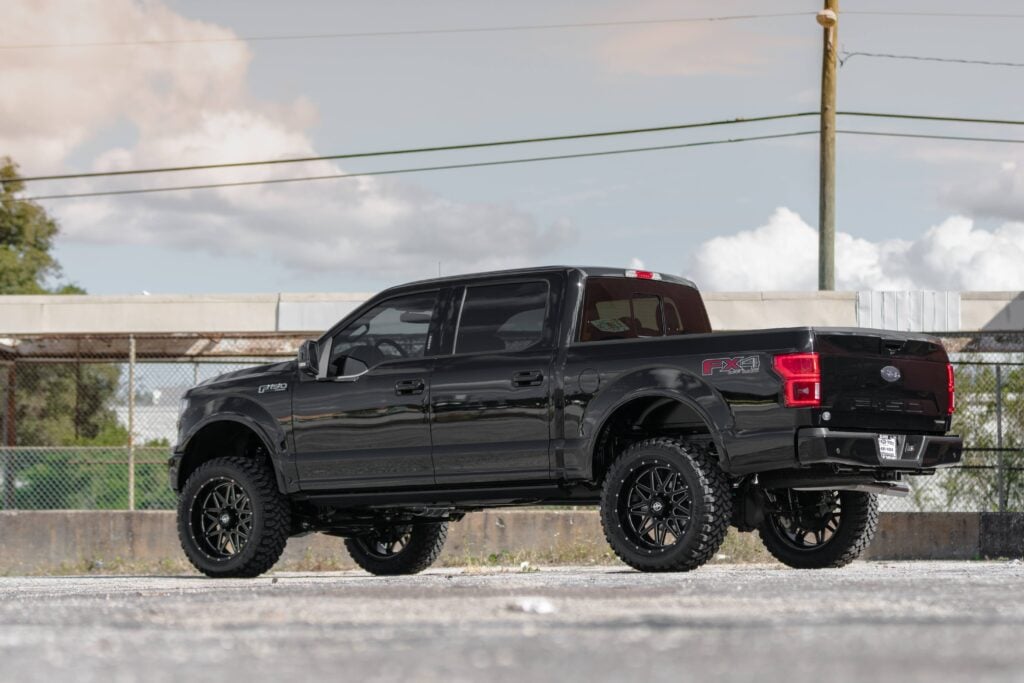
For trucks and off-road vehicles, durability is king. These wheels need to withstand much more abuse than a typical passenger car wheel. When a customer is building an off-road rig, you’ll want to guide them toward wheels made from stronger materials designed for rugged conditions. Offset and backspacing are especially critical here. An aggressive offset can provide the necessary clearance for larger, knobbier tires and modified suspension systems, preventing rubbing that can damage both the tire and the vehicle. The right setup enhances stability on uneven terrain, giving your customer the confidence to tackle any trail.
Luxury and Performance
With luxury and performance cars, the conversation shifts to weight and aesthetics. Your customers are looking for wheels that sharpen handling and complement the car’s design. Lightweight wheels are a huge factor, as reducing unsprung mass can significantly improve handling and acceleration. Forged aluminum is often the material of choice for its excellent strength-to-weight ratio. However, fitment is about more than just weight. The wheel’s diameter, width, and offset must work in harmony with the vehicle’s suspension geometry to maintain, or even enhance, its responsiveness and ride quality. It’s a balance between form and function.
Daily Drivers and OE Replacement
When a customer needs wheels for their daily driver or as an OE replacement, the priorities are compatibility, comfort, and safety. The goal is to find a wheel that performs just like the original. It’s essential to match the size, bolt pattern, and offset of the factory wheels to ensure the vehicle’s handling, braking, and safety systems function as intended. While style is still a factor, practicality often comes first. You can help customers consider how different materials and finishes will hold up to daily driving, road salt, and frequent car washes, ensuring they get a wheel that is both safe and durable for the long haul.
Get Expert Fitment Guidance
While fitment calculators and spec sheets are fantastic tools, they can’t always account for the nuances of a custom build or a customer’s specific goals. This is where a human connection makes all the difference. Partnering with a distributor that offers expert fitment guidance isn’t just a perk; it’s a core part of a strategy to protect your margins, save time, and keep your customers happy. Think of your distributor’s support team as an extension of your own, ready to help you confirm specs, solve tricky fitment puzzles, and give you the confidence to sell any wheel to any customer. This support transforms a simple transaction into a valuable partnership, helping you avoid costly errors and build a reputation for getting it right every time. When you have a reliable expert on your side, you can take on more complex jobs, expand your offerings, and ultimately grow your business with fewer headaches. It’s about working smarter, not harder, by leveraging the expertise of those who live and breathe wheel fitment daily.
The Value of a Knowledgeable Partner
Let’s be honest, wheel fitment can get complicated. You’re dealing with dozens of variables, from a vehicle’s factory specs to its modification history. A knowledgeable partner acts as your safety net. They have access to extensive databases and, more importantly, the real-world experience to interpret that data correctly. Instead of spending hours searching forums or second-guessing your measurements, you can make a quick call or send an email to get a definitive answer. This allows you to provide your customers with accurate information confidently, ensuring the wheels you recommend will not only fit but also deliver the performance and stance your customer is looking for. A good partner has a deep understanding of wheel specifications and how they apply across countless vehicle applications.
Reduce Returns and Errors with Expert Support
Nothing hurts your bottom line more than a return due to incorrect fitment. It costs you time, shipping fees, and customer trust. Expert support is your best defense against these preventable losses. When you can verify fitment with an expert before placing an order, you drastically reduce the chance of a wheel rubbing on the suspension or brake calipers. This is especially critical for non-standard setups like lifted trucks or performance cars with big brake kits. Using a fitment calculator is a great start, but an expert can help you interpret the results and account for variables the calculator might miss, like tire bulge or inner clearance. This proactive approach ensures a smooth installation process and a satisfied customer who will return for future business.
Related Articles
- How to Select the Perfect Wheel Size for Your Vehicle
- The Dealer’s Guide to Custom Forged Wheels
- WHEEL Adapters – Elite Wheel Warehouse
Frequently Asked Questions
What’s the single most common mistake you see shops make with fitment? The most frequent issue is focusing only on diameter and bolt pattern while overlooking offset. A customer might find a wheel that technically bolts onto their car, but if the offset is wrong, it can cause serious problems. It might rub against the suspension on the inside or the fender on the outside. This is why understanding offset is not just for custom builds; it is a fundamental part of every safe and successful wheel installation.
My customer wants an “aggressive stance.” How do I achieve that without causing rubbing issues? This is a great question because it balances aesthetics with function. An aggressive stance usually comes from a lower (or more negative) offset, which pushes the wheels outward. The key is to use a fitment calculator to see exactly how much the new wheels will “poke” compared to the stock setup. You need to measure the physical space available in the wheel well, especially during turns and suspension compression. It is a careful balancing act, but starting with precise measurements prevents the final result from becoming a problem.
Is it okay to use a wheel if the center bore is bigger than the vehicle’s hub? Yes, this is a common situation and it is perfectly safe if you handle it correctly. When a wheel’s center bore is larger than the hub, you must use hub-centric rings. These rings fill the gap, ensuring the wheel is perfectly centered on the hub. Without them, the wheel is only supported by the lug nuts, which can lead to vibrations and put unnecessary stress on the wheel studs. It is a small, inexpensive part that makes a huge difference in ride quality and safety.
How do I know for sure if a wheel will clear my customer’s big brake kit? This is a critical check, especially for performance cars. While offset and backspacing give you a good idea of inner clearance, the shape of the wheel’s spokes is what determines brake clearance. Some wheels with a seemingly correct offset can have spokes that curve inward and hit the caliper. The best method, short of a physical test fit, is to consult the wheel manufacturer’s specifications or work with a distributor who has experience with these specific combinations. They often have templates or data on what fits over popular brake systems.
Besides a fitment calculator, what’s the best way to confirm a tricky fitment before ordering? While calculators are amazing tools, they can’t account for every variable. When you have a complex build, like a lifted truck with a unique suspension kit or a custom car, your best resource is a human expert. This is where having a strong relationship with your wheel distributor is invaluable. A quick call to a knowledgeable support team can save you from a costly mistake. They have seen thousands of combinations and can often provide the specific insight a calculator might miss.